
Natural History of Skunks
Skunks get a bad reputation due to their natural defence strategy of spraying predators with a strong, acidic musk. They are easily recognized with their black bodies and white stripes. They are naturally shy animals and only spray when startled or when they feel threatened. The warning signs include raising their tail, stamping their feed and turning sideways.
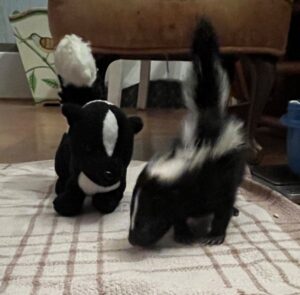
Skunks are also highly nearsighted, which results in a fear response to nearby movement. Their curiosity often gets them in trouble, with stories of soup cans stuck on their faces until a brave hero pulls it off and the skunk is freed to wander off. Skunks are nocturnal (come out to feed at night). Sometimes they are seen in the early morning hours, searching for a suitable place to spend the day. They are generalists and will eat just about anything from eggs to young birds, fruits, berries, and vegetables. Compost piles are a common draw for them, as are chicken coops, much to the frustration of many farmers.
Skunks are active during most of the year, denning under porches or sheds in the spring to have their young, usually using pre-existing holes, although they are very good diggers. Male skunks do not participate in raising young and remain generally solitary. The 5-6 pups are weaned at about 6-7 weeks of age, when they start to follow the mother on nightly hunting trips. The family leaves the den area shortly thereafter. They will disperse on their own in the late summer, early fall, to find a suitable place to hibernate for the winter.
What To Do When…
The skunk is living under my shed/porch
If it’s springtime, the skunk may be a mother looking for a place to raise her babies for a few weeks. If possible, allow this to happen and leave them undisturbed until the family leaves. If this is not acceptable and you can confirm you have found the skunk before the babies are born, sprinkle flour around the entrance, wait until dark, and check for tracks leading from the den site.
Once you have confirmed the skunk is not inside, close the entryway and block any other shelter options in the area to discourage others from denning in your space. If there are babies and you are unwilling to wait for them to join their mother on her nightly forays, try putting up lights starting at dusk, and play a loud radio to encourage the mother skunk to find another place to raise her young. You will have to wait for her to make several trips back and forth to remove all the young. Do not close the hole prematurely with young in the den.
In the fall, skunks are looking for a warm place to hibernate for the winter. Again, if you can tolerate them, once they are underground and asleep, they will not disturb anyone until spring, when they will wander off in search of food. If this is not an option, use the above techniques to encourage the skunk to move along. Make sure they are out by using the flour sprinkled around the hole. You will have to securely close up all den options, or other skunks will find the space and move in.
A skunk has sprayed my dog!
Wash the animal with a mixture of: one quart 3% hydrogen peroxide (from the drugstore), 1/4 cup baking soda, one teaspoon liquid dish soap. Be careful around the eyes, and make sure to wash down into the undercoat to the skin. Follow the wash with a good rinse of tap water. The quantity above is enough for a cat or a small dog. Make more as needed. Do not store this mixture; it can explode in an enclosed container. There are also commercial deodorizers available through veterinarians and pet stores. Do not use tomato juice. It only masks the skunk odours. To deodorize your home, boil water and add rosemary to the pot.
A skunk is hanging around my yard!
Feed pets indoors; if you must feed outside, bring the food indoors at night. Lock all pet doors at night to prevent skunks from coming into the house. Pick up ripe fruit from the ground. Do not leave fallen fruit lying around. This attracts the hungry skunks. Enclose your compost. Skunks are not good climbers or jumpers, so a three-foot-high fence can be effective in keeping them out. Skunks are very good diggers; however, you will want to extend the fence about six inches below the ground surface to discourage them from entering your yard.
A skunk is digging up my grass!
If a skunk is digging in your lawn, you may have a grub problem. Grubs are insect larvae that eat grass roots. Watering the lawn in the morning rather than the evening will make it harder to dig and keep grubs deeper in the soil during the evening hours. Use beneficial nematodes as a good, non-toxic way to kill the grubs first thing in the spring or if you find you have a heavy grub infestation. You can also use black or cayenne pepper on lawns to discourage skunks from even trying to find the grubs. This will need to be reapplied regularly until the skunks learn not to even set foot on your lawn.
A skunk has wandered into my garage/shed!
Skunks commonly wander into open spaces at dusk. They have very poor eyesight, so if you move slowly and quietly, the skunk will hardly notice you. Sprinkle flour across the garage opening and watch for tracks leading to the space so you know it is gone.
Additional Resources
Looking for more local information on skunks? The City of Saskatoon provides useful information on coexistence here.
-
Need More Info?
If you do not find the information you are looking for, or if you have found an animal, please call us immediately so we can assess the situation and determine whether intervention is needed.
Call (306) 281-0554 or find your nearest rehabilitation centre here.