
Natural History of Foxes
Fox species in Canada include the red fox, gray fox, arctic fox, and the swift fox. Saskatchewan is home to 3 of these incredible fox species: the red fox, arctic fox, and swift fox. The red fox (Vulpes vulpes) is by far the most common species. It is extremely adaptable and able to adjust to many different habitats.
Foxes are members of the dog family, Canidae, although their behaviour sometimes reminds us more of that of felines. Their general appearance is similar to that of dogs, wolves and coyotes. However, foxes are much smaller than coyotes or wolves. They measure (on average) 22-32 inches (56-82 cm) in length for the head and body. The tail adds about 14-16 inches (35-43 cm) to this. An adult fox weighs from 6-15 pounds (2.7-6.8 kg), which is about the same as a house cat. So, while there are many stories about foxes predating domestic cats, this is not common unless the animal is extremely hungry.
Foxes are omnivores. They can eat almost anything. Their favourite foods are small mammals (voles, squirrels, muskrats, hares), birds, carrion, eggs, insects, and vegetation. It is this adaptability that allows them to vary their diet based on what is available. Foxes hunt alone, rather than in packs like wolves or dogs. Many city-raised foxes have learned to scavenge in garbage cans or find pet food that has been left outside. In times of plenty, foxes will cache food and hide it for use later.
Foxes are capable of adapting to a wide range of habitats and can thrive close to humans, but they prefer wild settings. They require only a source of food and cover. Foxes are quite vocal, having a large repertoire of howls, barks, and whines. The red fox has several natural enemies: man (principally as trappers), wolves, coyotes, lynx, wolverines, and perhaps bears. Eagles can be a major predator of young foxes in some areas. They are wild animals, but if humans do not disturb them, they are quite compatible with urban, suburban and rural settings.
They have lived in harmony with people in the National Parks without incident since the parks were formed. Many farm families enjoy watching the antics of the young at the den each spring. If humans are respectful and maintain their distance, foxes are not aggressive animals and do not go out of their way to attack or otherwise antagonize people. Any wild animal, if habituated to expect food from humans, will become problematic.
Red Fox
Natural History of Red Foxes
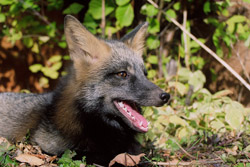
“Red” foxes actually come in several different colour phases. The typical red fox has a reddish coat, white-tipped tail, and black “stockings”. The white tail tip distinguishes this fox from other species, no matter what the colour phase. Several colour phases can occur in one litter. The phases are described by the coat colour: black, silver, and cross foxes. The silver phase is similar to the black colour, but it has silver-tipped guard hairs that give it its name. The cross phase has a dark (black/brown) “cross” over the shoulders and down the back. The dark phases are more common in the north, but are still unusual.
Red Foxes breed during February and March. They use a den which is about 15-20 feet long, often on the side of a knoll. Sometimes foxes will dig their own dens, but more often, they use “pre-made” dens which were once the homes of small mammals (such as a badger) or a larger animal, such as an old coyote den. They expand or fill in the den as needed to make it their home. Foxes will return to the same den if it was successful the previous year.
Within the den, the “kits” (baby foxes) are born into a grass-lined nest after a gestation period of 53 days. These kits are born blind but well-furred. Most foxes have from 3-6 kits in a litter, but some foxes have been known to have up to 10 or 12. Generally, only one litter is born each year. Their eyes open at 8-10 days of age, and they venture outside of the den at about 5-6 weeks of age. Both parents raise the young, so if one is injured, the other can continue to raise the kits. The kits are weaned gradually and learning to hunt by 3 months old. They usually leave their parents in the fall and seek out their own territory.
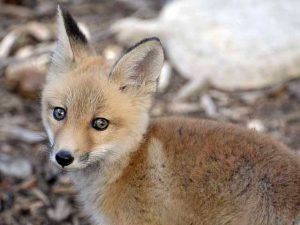
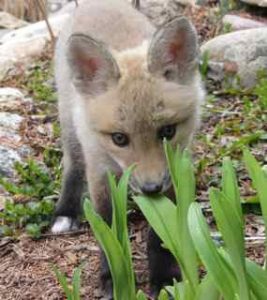
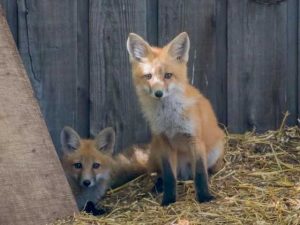
Red Foxes at LSWR
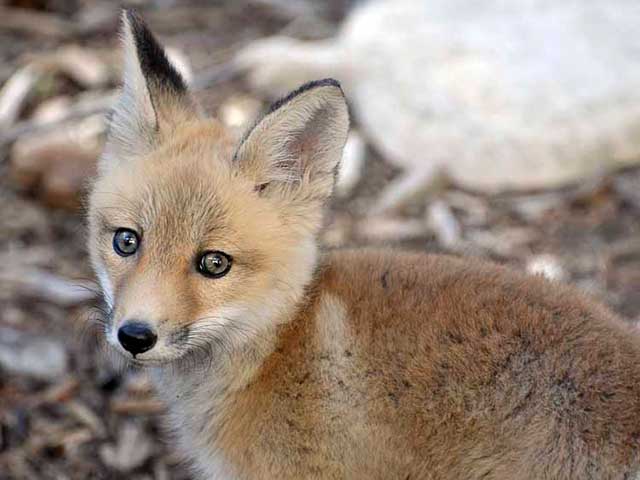
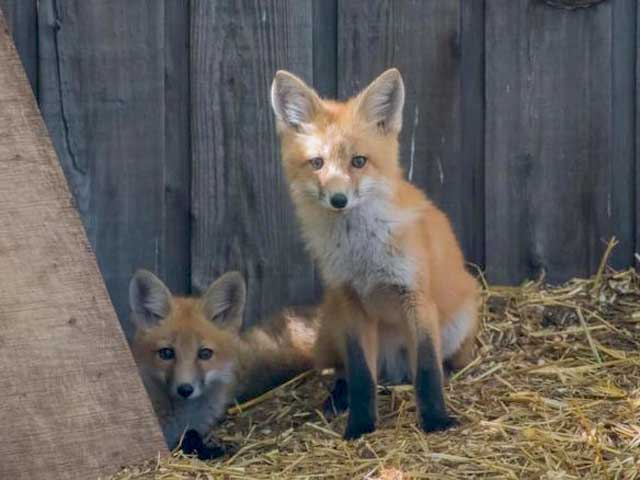
Each year, LSWR receives multiple young fox kits, always the result of being orphaned and, rarely, from abandonment.
Featured in this slideshow are some of the youngesters we have had in our care over the years. For more adorable videos of our patients, check out videos like this one on our YouTube: Fox Kits Grow Up – Living Sky Wildlife Rehabilitation
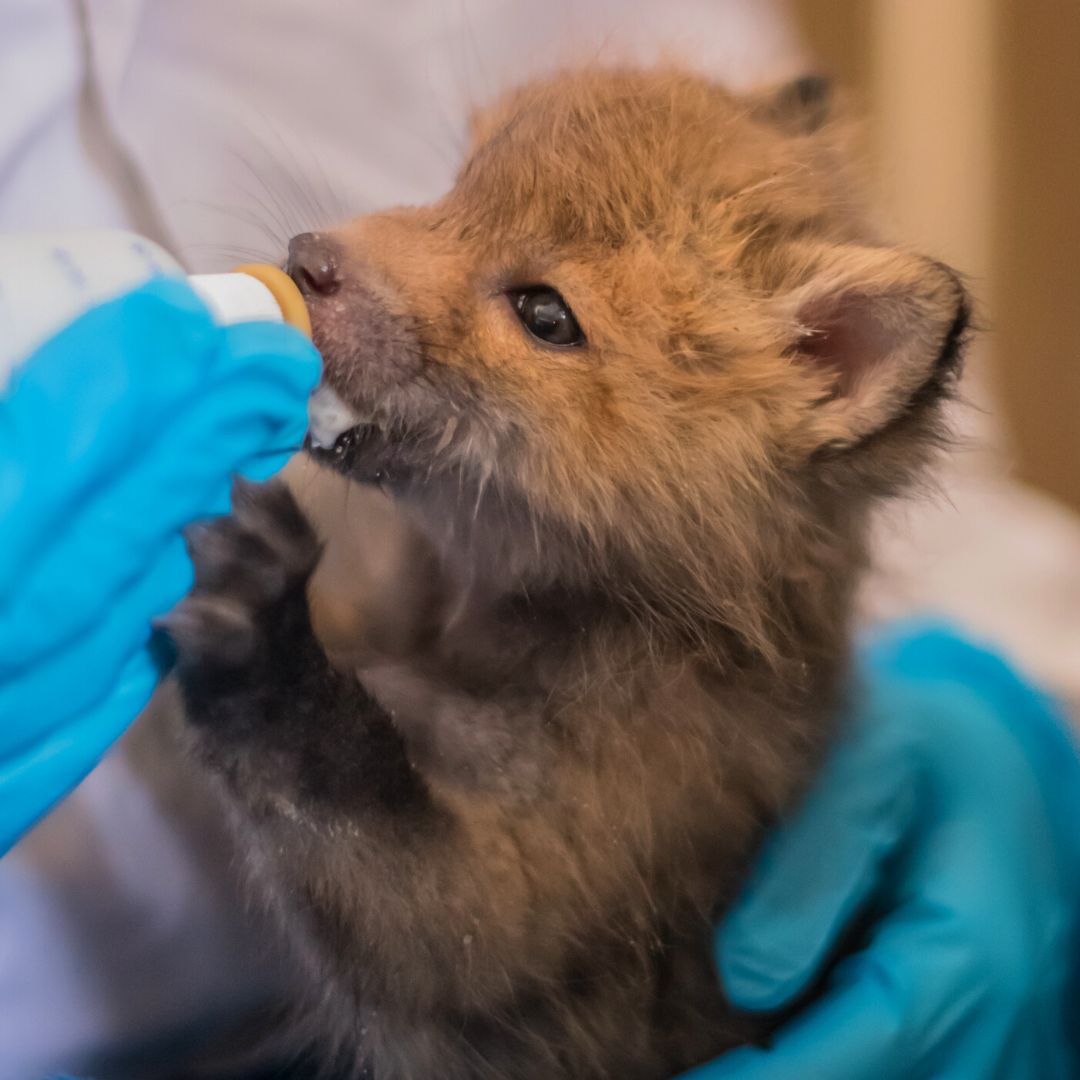



Swift Fox
Natural History of Swift Foxes
The swift fox (Vulpes velox) is the smallest fox species found in Saskatchewan. They are extremely restricted in range due to their extremely limited range in the province. This species was considered extirpated from Canada by the 1970s as a direct result of habitat loss, trapping practices, and primary (accidental) and secondary poisonings from insecticides and rodenticides. As of 2026, the swift fox is listed as Threatened in Canada’s Species at Risk Act.
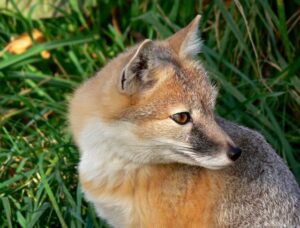
As the smallest of the fox species, swift foxes average around 2.5 kg or about 5.5 lbs, the size of a very small dog or cat. To put it in perspective, red foxes are twice the size of the swift fox! These little canids can be identified by their small form, primarily pale yellow coat tinged with grey, and yellow-brown underside. They have large bushy tails, consistent with their cousin species, and their ears are very large and pointed.
Swift foxes rely on food sources similar to those of their larger cousins: rodents, such as mice and voles, insects, including grasshoppers and beetles, birds, and, when available, grasses, fruits and seeds.
Swift foxes are dependent on native short grass prairie and some medium mixed grass prairie for their survival (Parks Canada, 2022). With the decline in these natural and highly threatened spaces, the swift fox populations have declined in tandem. These remarkable creatures are part of a very large and complex ecosystem and play an important role in these sensitive habitats. Due to their incredibly sensitive nature and specialized lifestyle, they act as an indicator of the health of our prairies, and with a slow increase in their population numbers, we can hope this is a sign of our prairie health returning.
Thanks to the combined efforts of the Swift Fox Recovery Team, members of the public, ranchers, and other conservation groups, there is hope that the swift fox population on the prairies will continue to increase.
Arctic Fox
Natural History of Arctic Foxes
The arctic fox (Vulpes lagopus) is easily identifiable by its distinct white coat that it flaunts during the cold northern winters. When the snow begins to melt in early spring, the Arctic fox’s coat sheds to reveal a much thinner, two-toned brown coat with the legs, tail and back appearing much darker than the buff coloured underbelly. Some individuals may even appear to have a pale bluish-grey in winter, with it darkening in the summer. This colouration, similar to the ‘Blue Goose’ variation of the snow goose, earns the Arctic fox the nickname, ‘Blue Fox’. This colour variation is significantly less common in Canada than in its northeasternmost counterparts in Greenland.
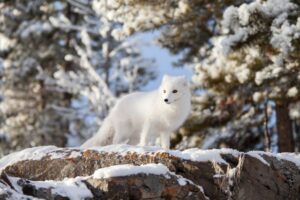
The Arctic fox is one of the few species that is specially adapted to the severe and often hostile Arctic climates, capable of withstanding extreme cold weather and their ability to sustain itself on a large variety of foods, from lemmings to birds, eggs, ground squirrels, and berries.
In Saskatchewan, this remarkable species is found, only seldomly, in the far northernmost part of the province, at the borders to the Northwest Territories and Nunavut.
-
Need More Info?
If you do not find the information you are looking for, or if you have found an animal, please call us immediately so we can assess the situation and determine whether intervention is needed.
Call (306) 281-0554 or find your nearest rehabilitation centre here.